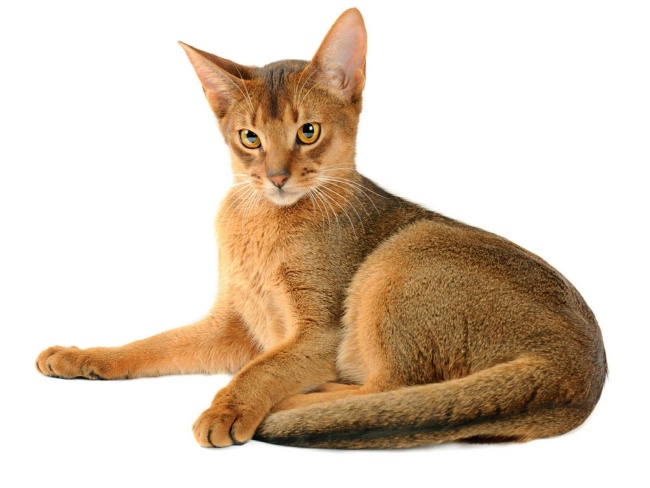
Abyssinian cats are true aristocrats. They are intelligent, self-respecting, independent, but at the same time very affectionate.
The Abyssinian is a breed of domestic short-haired cat with a distinctive "ticked" tabby coat, in which individual hairs are banded with different colors. The breed is named for Abyssinia, where it is believed to have originated.
History of the breed
The ancestors of the animal are wild African cats that lived on the territory of Abyssinia (now Ethiopia). The first Abyssinian cat in Europe was called Zula. According to one version, in 1868 he was brought to London by Sir Richard Napier, a member of the British military expedition. In 1882 the breed was officially registered in Great Britain.
If you decide to get a pet of this breed, keep in mind: the animal is very mobile and sociable, needs space to play and does not tolerate closed doors.
Care
A cat of this breed does not require special care. Once a week, the coat should be combed out with a comb with frequent teeth. Abyssinian cats need to be washed only as they become dirty or during molting (this will help get rid of dead hairs faster). You should also take care of the scratching post.
There are no diseases typical for cats of this breed, but you need to be attentive to the state of the kidneys and the reproductive system. Abyssinians quickly get used to a certain type of food.
Breeding
The litter of Abyssinian cats is usually small. The predominant sex in the breed is males. This situation can be explained by the consequences of crossing, if we believe the hypothesis that Abyssinian cats are a hybrid of domestic cats and wild African cats.
Choosing a Kitten
A healthy baby is active and playful, does not show signs of aggression and is not too shy. It should not emit an unpleasant odor, the coat is shiny, the eyes and ears are clean, without discharge. The defects of the breed are stripes on the front legs, lack of eyelid edging, insufficient number of ticking stripes.