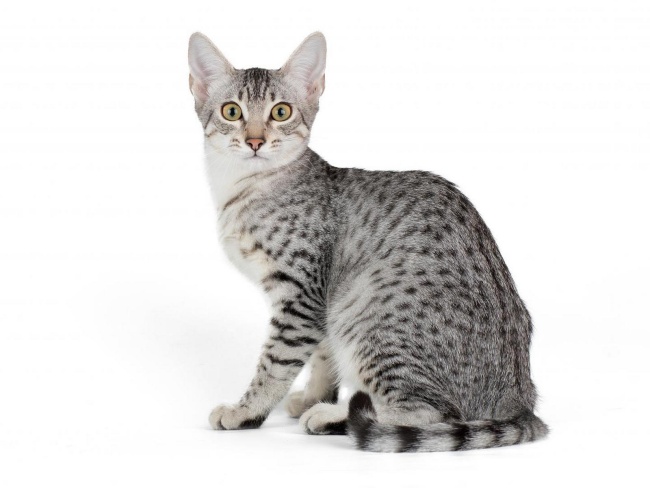
The trademark of this breed (Egyptian Mau) is its coat colour: each hair should have two or three ticking rings. These are active and sociable animals that do not tolerate loneliness. They are curious, require constant attention, very "talkative". Mau, like many other descendants of wild cats, love water and calmly treat bathing.
History of the breed
The Egyptian Mau is an ancient aboriginal breed that has undergone natural selection. The modern history of these cats began 100 years ago, when breeders from Italy, Switzerland and France decided to find and revive this breed. However, by the mid-1940s, the breed was virtually lost. It was able to be recreated in the 1950s thanks to the efforts of Russian Princess Natalia Troubetzkoy. She registered her Mau with a branch of the International Cat Federation and showed them at a show in 1953. In 1980 the breed was recognised by the major feline associations.
The Egyptian Mau is one of the oldest breeds. The word "Mau" means "cat" in ancient Egyptian.
Care
Egyptian Mau do not require special care. However, they are active and like to lie in various corners of the flat during the day, often choosing not the cleanest places, so you will have to wash them often enough. Wool should be combed out at least once a week with a comb or rubber brush. Cats also need to buy a scratching post and trim their nails regularly. No breed-specific diseases have been identified.
Egyptian Mau have a unique fold of skin under their belly like a cheetah. It provides great flexibility and stride length, making them the fastest of domestic cats. Some members of the breed can reach speeds of up to 48 kilometres per hour.
Breeding
Three colours are acceptable for showing: bronze with brown spots, silver with black spots and smoky, a charcoal colour with black spots. Smoky is the rarest of these. Black and marbled Mau can sometimes appear in a litter. Cats of this colour are not allowed to show and are used only for breeding.