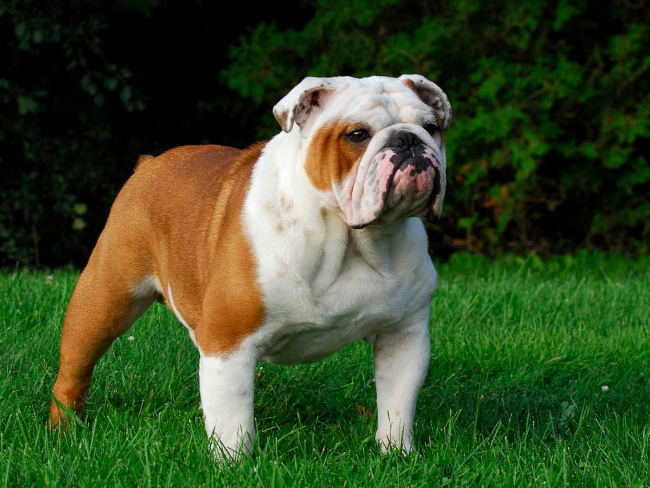
Bulldogs are big homebodies, and it is much more pleasant for them to lie on the couch.
The first English bulldogs appeared in the second half of the XIX century. Phlegmatic, balanced and unruffled dogs of this breed are considered one of the national treasures of England. They possess qualities often attributed to true gentlemen, thoroughness, conservatism, respectability and rough elegance. Some scientists believe that their ancestors were large dogs that lived in Greece, where they were used for guarding and hunting. Modern bulldogs are mostly purchased as protection and companion dogs, but keeping them requires a great deal of responsibility.
By the way
The first standard dealt very loosely with the shape of the tail and ears of the English Bulldog, but nowadays these features are given close attention. The dog's tail should be short and the desired ear type is “rose”.
Breed History
The English Bulldog Standard was created in 1865. It focuses on the qualities that allow a fighting dog to last as long as possible during a bullfight. The standard describes an animal with a large head and a short but broad muzzle. The nose, close to the eyes, allows the dog to breathe even while hanging on the bull. And thanks to its low stature, the bulldog can quickly press itself to the ground to protect itself from the horns. The weight of the dog should not be too small so that the bull feels it, wants to get rid of the load and tires quickly.
Health and proper nutrition
Modern, good-natured bulldogs were bred exclusively for exhibition, which makes them susceptible to many diseases. That is why the owners of these dogs should pay special attention to the diet.
The most important thing when keeping an English Bulldog is an appropriate diet. He is prone to obesity, and excess weight inevitably affects the work of muscles, heart and respiratory system. Bulldogs are also prone to gastric congestion, eyelid congestion, and third eyelid adenoma. At the slightest symptom of any of these ailments, a veterinarian should be consulted immediately.
Only proper nutrition
Bulldogs should never be fed smoked and fatty sausage, canned food, baked goods and sweets. In the diet of the dog should be present mainly lean meat, boiled rice and vegetables. In addition, specialized foods are suitable for the pet, but only with the content of all the necessary substances and microelements.
Care and training
Because bulldogs have a short and smooth coat, their care is minimal. The owner only needs to brush the pet once a week with a special brush with stiff bristles.
But the muzzle and the area near the tail need special care. They should be wiped regularly with a soft, damp cloth or rag to avoid infection. Detergents or soaps, which may cause allergies, should not be used. In some cases, special ointments can be used. Moisture should not accumulate between the folds, so after the procedure they are wiped dry.
Bulldogs do not need a lot of strain during walks. The owner can take a leisurely stroll with them in the park, and this will be sufficient.
Bulldogs are big homebodies, and it is much more pleasant for them to lie on the couch.