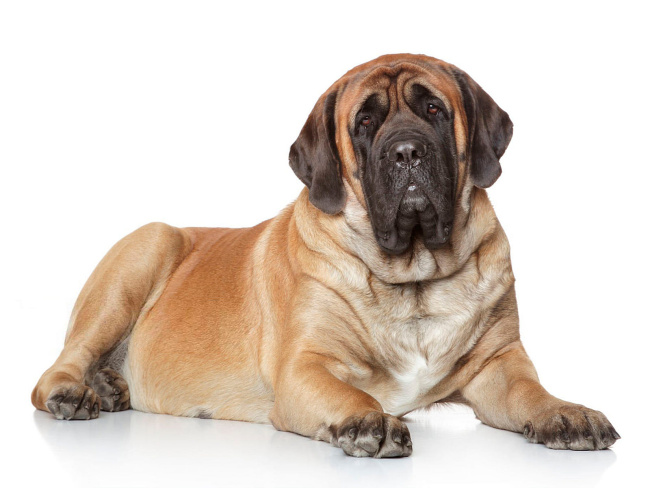
Mastiffs are excellent security guards who are vigilant in their territory.
Nowadays, Large Mastiffs are often kept as loyal and intelligent companion dogs.
The breed's closest ancestors are believed to be Tibetan Mastiffs, which were brought to Britain by Phoenician traders in the 6th century. The pets became so adopted that they became the original English dogs. Since then they have been used as hunters, fighters and guards. Over time, their calm and balanced nature became more valued, which is why today Mastiffs are often kept as pets in families with children.
History of the breed
Mastiffs became particularly popular in Britain as fighting dogs. They were often used to herd bulls and bears. They were also purchased as shepherds and guards.
Only with time the character, not only the working characteristics of mastiffs began to be valued. As companion dogs, mastiffs became popular in the United States. Over time, breeders managed to remove their inherent ferocity from their character. Now they are calm, loyal and cautious dogs, which are especially careful with children. Only if necessary in the process of training they develop pugnacity and aggressiveness.
By the end of the Second World War mastiffs practically disappeared in Europe. Then they began to be imported from North America, thanks to which the breed was revived.
In the Guinness Book of Records.
Representatives of this breed are considered one of the heaviest dogs in the world. The male dogs can weigh up to 100 kilograms and have even been included in the Guinness Book of Records more than once. This body weight is due not only to the accumulated fat, but also to the well-developed musculature.
Character and care
Mastiffs are very friendly, sociable and affectionate dogs. They are not particularly playful, but love to spend time with the family.
Representatives of this breed are big silent. They rarely bark, but can snore in their sleep and drool.
Mastiff puppies need to be socialized as early as possible, otherwise they may grow up to be overly wary and withdrawn. This may be strange for such a giant, but he is very sensitive.
Mastiffs should not be left alone with small children. They do not want to harm them, but because of their large size they can be careless.
Training
This breed is not suited to harsh training methods. They are hard to endure physical punishment and may react aggressively.
That's why the owner of the mastiff better have patience and gentleness, if he wants to get a good result from working with the pet.
If the owner shows enough affection, the dog is always happy to learn new commands. He is ready to indulge in everything to the owners with whom a good emotional bond has been established.
Excellent guardian
Nowadays, Mastiffs are mostly kept as bodyguards, companions and watchmen. They are especially comfortable in private homes and cottages. They are excellent security guards who keep a watchful eye on the situation in their territory. Dogs prefer to make sure a stranger is harmless before they let them into the house. It is better for a new person to first get the mastiff comfortable with him, and then get acquainted with his owners. If the pet does not like someone, it is unlikely to attack, but it will certainly try to frighten him.