
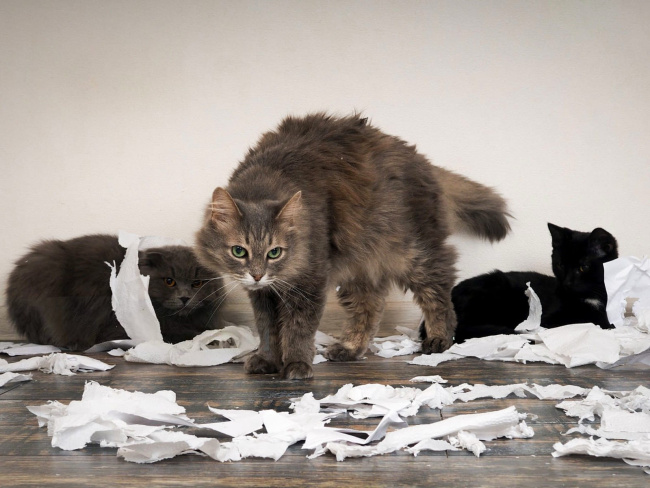
A pet should be able to adapt to living with you in such a way that, while retaining its individuality, it does not become a burden or a source of trouble for the household. To achieve this, it is necessary to curb bad habits and predispositions. The best thing you can do is prevent them.
American experts identify five main problems that arise when raising a cat.
Problem #1: A capricious and aggressive cat that does whatever it wants.
The roots of this behavior lie in childhood, when the cat did not know the word “no.” What to do? Pick up the kitten more often. Never hit it — this will not help, but, on the contrary, will make it angry. If it shows its claws, just stop playing and say “no.” Remember: a cat's aggressiveness is often caused by fear.
Some cats hiss. You can respond in kind. If that doesn't help, use a spray bottle. Sometimes animals behave very aggressively, scratching smooth surfaces as if trying to bury something. This can happen when they feel they have lost control of the situation. Offer them an old rug.
Or wrap the animal completely in a warm towel. Warmth reduces fear, as do affection, love, and care.
The second possible reason for aggressive behavior is territorial protection. This is more common when two or more animals live together. In such cases, you need to patiently accustom the cats to each other. Under no circumstances should you lock them up! At worst, spray both of them with the same cologne.
Problem #2. Uncouth cats
These cats refuse to use the litter box, mark everything around them, and pull things off the table.
First of all, you should consider medical reasons. If everything is fine in this regard, think about whether the cat is living well. Maybe it is seeking attention because it is angry, lonely, and unhappy? The solution is love and care. When you come home from work, talk to your cat first, and then to your spouse. Maybe it is angry about something? Or at someone? Cats dislike people they fear, which is why they urinate right in front of them. We recommend hanging foil that was used to wrap fish over the cat's favorite urination spot. This will distract the animal. Or try feeding the cat in the place where it urinates.
If you still can't figure out why they're doing this, try putting sticky tape around the “fatal” area or spraying everything around with white vinegar. Just don't stick the cat's nose in there! Make a litter box that the cat will like: clean, with a good absorbent material — sand or soil or a substitute.
Problem #3. Crying cat
The first thing you want to do is pick him up. Then, after listening to his cries for hours, you want to kill him. Unless it's a medical condition, of course, cats cry when they feel abandoned. This means you've been paying less attention to him. What is the solution? Provide him with a secluded place to his liking; do this before the “concert” begins; if the cat still cries out at night, spray him with water.
Problem #4. The destructive cat
Cats of this type try to tear up everything in their path. Be patient: it will take time for them to learn that they cannot tear up everything. There should be an object in the apartment that the animal can use to vent its energy, such as a scratching board.
Keep plants that it is particularly fond of out of reach. It is better to create its own “cat garden” — oats growing in a bowl. You can also grow wheat or parsley.
To wean your cat off jumping on furniture, you can try the simplest method: tables and chairs with a surprise trap made of a stack of books, cardboard boxes, or tin cans that fall down with an unpleasant sound when the cat touches the forbidden furniture. Or place deodorant cans everywhere: cats are terribly afraid that they will spray. In addition, they sway menacingly when jumpers perform their pirouettes.
Chewing on wires is a deadly habit. You need to spray them with white vinegar or smear them with tobacco paste. But first, check how your cat reacts to these smells.
Problem #5. The prima donna cat
Symptoms: eats at the same time as you, but only the best of what you are eating. Graciously allows you to take care of it. In a word, a spoiled snob cat. What should you keep in mind? Most cats are able to switch to a new diet within three days if you think it's the best option. They can go hungry for a few days, nothing terrible will happen!
Measures for re-educating a prima donna: do not feed them from your table, disguise the new food, mix it with their favorite dish, gradually increasing the dose. Steel your heart: the cat will look at you with pleading eyes. Feed the cat strictly on schedule. You can even ring a bell. Pet the animal more often.