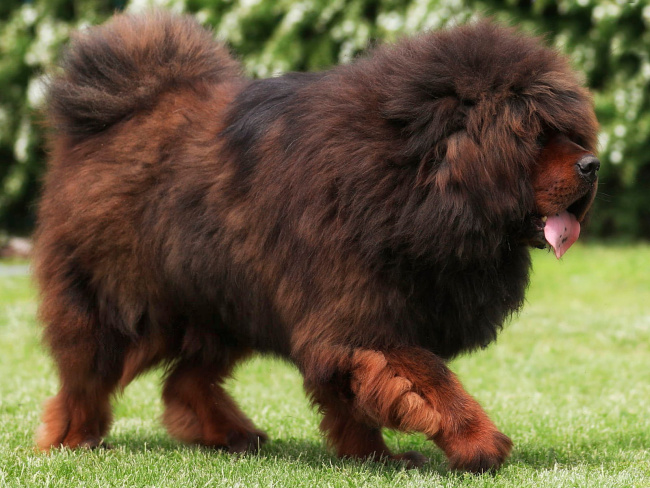
Tibetan Mastiffs are powerful, hardy and strong animals that endure even the harshest weather conditions and harsh lifestyles.
The Tibetan Mastiff is one of the oldest dog breeds. In ancient times, its representatives guarded Tibetan monks and helped nomads in the Himalayas. Chinese merchants often took mastiffs with them when passing through Tibet. The large dogs guarded them reliably from bandits. These powerful, hardy and strong animals endured even the harshest weather conditions and harsh lifestyles. They easily traversed rocky paths and lifeless sand. It is not surprising that since early centuries mastiffs have occupied a special place in Tibetan culture. Many myths and legends have been written about them.
From Tibet, dogs were brought to Central Asia and Mesopotamia, from where they traveled to Greece and spread to other European countries. Mastiffs were especially appreciated in Rome. The unique fighting qualities of the breed delighted legionaries who took the dogs on military campaigns.
In Europe, Tibetan Mastiffs became the favorite pets of the nobility. They were given to royalty, including George V and Edward VII.
Blood Purity
The physical and mental qualities of these dogs have been valued throughout the ages. Tibetan Mastiffs have been used to breed many other breeds. The part of the mountains where they lived is securely fenced off from the rest of the world by steep snowy peaks and a vast desert, so the purity of the mastiff's blood has been preserved for a long time.
Character
Tibetan Mastiffs are very friendly. If they decide they like a person, they will behave in a friendly manner, but within reasonable limits. Mastiffs love their master immensely and guests to their home are received with due deference.
With other dogs, they behave calmly and sometimes even friendly. But there is no trace of their good-naturedness when they see danger. They are ready to defend the owner to the last. Just the threatening look of a dog can scare away the enemy.
Keeping
Tibetan Mastiffs have a long coat with a dense undercoat, making them well able to withstand even the harshest weather conditions. If kenneled, they can be kept in the yard all year round. Representatives of this breed have good health, so they need to visit the veterinarian, as a rule, only for preventive procedures. However, like many large dogs, they can develop hip dysplasia over time.
At home, pets behave in a rather reserved manner. They vigilantly guard their territory and do not cause unnecessary anxiety to the owners.
Mastiffs are a little like cats in behavior. They also keep independent of their owners and prefer a nocturnal lifestyle. In the dark, meek dogs turn into vigilant watchdogs who constantly patrol the territory. Left alone on the property, the dogs choose the highest point and watch the neighborhood from it.
Even if the Mastiff has inadvertently dozed off, he is able to wake up instantly and react at the slightest sign of danger. The dog will fearlessly attack an opponent, even if he is larger and stronger than he is.
Raising
During training, Tibetan Mastiffs quickly learn new commands. Even small puppies are good at picking up their owner's mood and trying to please him in everything.
It is better to start training from the first months of the dog's appearance in the family. After all, an ill-mannered huge dog can cause a lot of problems. The pet should learn obedience commands as early as possible, otherwise in time an unruly giant actively protecting the family may cause trouble.