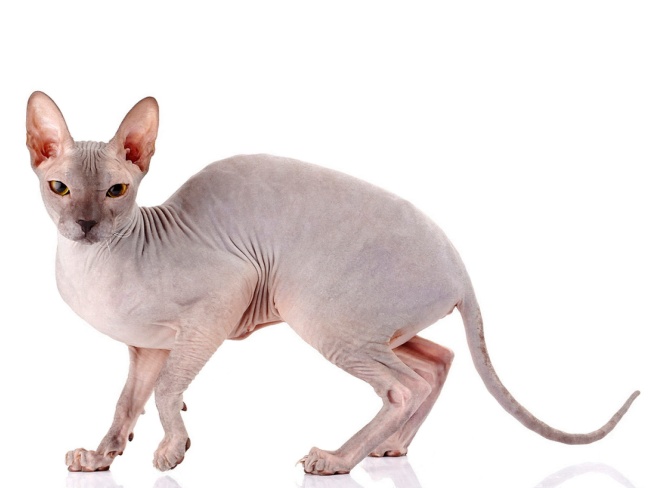
Don Sphynxes are affectionate, non-aggressive, playful, have a bit of dog-like behaviour, but are unobtrusive and tactful.
History of the breed
In 1986 in Rostov-on-Don Elena Kovalyova found a kitten in Rostov-on-Don, which partially had no fur on its body. The woman assumed that its absence was due to illness and started treatment, but most of the cat's body remained bald. In 1990, Varvara (as Elena's pet was named) had a naked offspring from a European shorthair cat. At that moment it became clear that it was all about mutation. Many years of selection work allowed to obtain a stable breed, which was registered in 1996 as the Don Sphynx.
Care
They are heat-loving cats, they do not need any special care and are almost allergy-free. They have very sensitive skin that needs to be wiped with a damp sponge.
Don Sphynxes like to sunbathe, so a slight change in colour is possible. Excessive exposure to the sun is harmful to the health of the Sphynx.
Breeding
The gene responsible for baldness in the Don Sphynx is dominant. When crossing these cats with representatives of breeds that have normal hair, you can get naked offspring in the first generation.
Don Sphynxes come in three types of hairlessness: brash - with short and stiff hair, velour - with soft fine hairs, naked - completely devoid of hair cover.