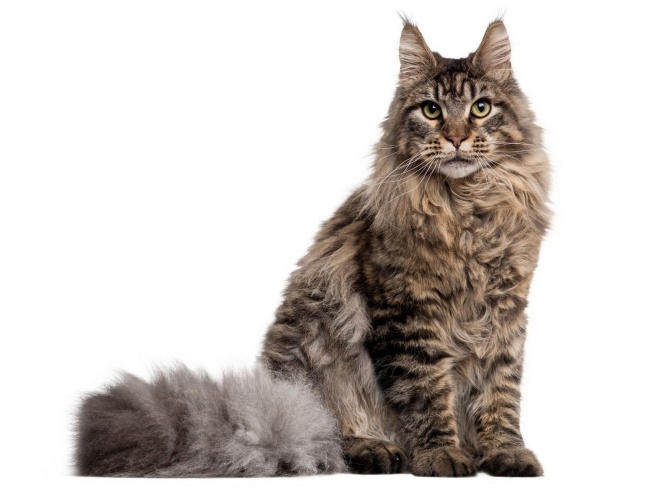
The state of Maine gave the world the American (or Maine) raccoon cat (Maine Coon). Hence the name of the breed: Maine is the English name of the state, coon is the second part of the word racoon, which means "raccoon". The character of Maine Coons is Nordic, firm.
They get along with dogs and other animals in the house. They do not need too much space.
History of the breed
Modern felinologists tend to the following version of the origin of the breed: it appeared by crossing local short-haired cats with foreign long-haired cats, most likely Turkish Angora, brought to New England by sailors, and the name was given due to the unusual tail and specific color. In 1968, several breeders founded the Maine Coonhound Breeders Association (MCBFA), which by 1980 had 1,000 hobbyists and 200 catteries.
Maine Coons are the largest breed of domestic cats. The weight of some individuals reaches 15 kg.
Care
Cats of this breed are very unpretentious in care. They do not need to be combed as often as, for example, Persians, but it is still necessary to make sure that the hair is not knocked down. A scratching post in the house is mandatory. It is recommended to trim the claws from time to time. Maine Coons prefer natural food to ready-made feed.
Maine Coons do not meow, but make a special guttural sound, similar to a purr, which at the impressive size looks very cute and touching. Breeders call them gentle giants, and this phrase characterizes the breed as best as possible.
Breeding
Any colors are allowed, except color-points (as in Siamese). Maine Coons develop slowly and only by the age of four or five are considered sexually mature and ready to breed. With proper care, the life expectancy of the pet is from 15 to 20 years, so for many years he will be a good friend and companion.