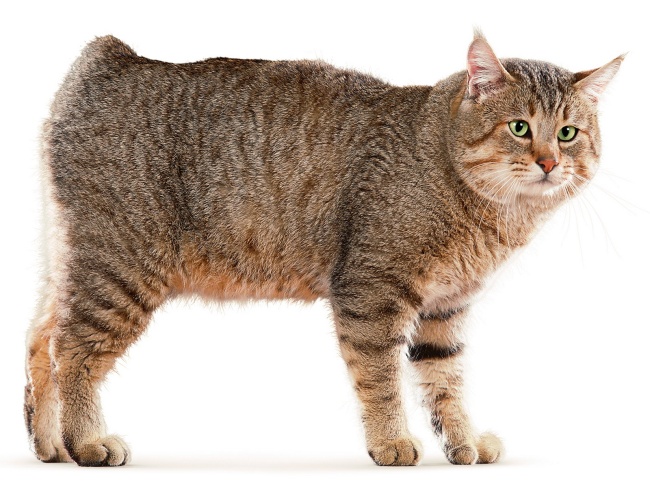
The Pixie-bob cat looks like a small bobcat. It is a friendly, affectionate and docile animal. It is sociable, loves to play, treats children very well, despite its appearance of a wild predator.
Cats emit a heavy sonorous purr, and when they play with each other - growl.
History of the breed
Breeders have long sought to create a small domestic lynx, crossing domestic cats with wild short-tailed forest cats. However, everything was unsuccessful until the 1980s. The breed was officially registered in 1995, but even today it is not recognized by all felinological organizations.
Care
The short-haired Pixie Bob should be combed once a week and bathed only during the shedding period, while the long-haired one should be combed a couple of times a week and bathed as needed. It is necessary to keep an eye on the length of the claws and trim them regularly. This is a breed with good health. The only hereditary defect is polydactyly, which does not affect either health or participation in exhibitions.
Breeding
The colors allowed by the standard are spotted black tabby or black rosette tabby. The hue is silvery or brownish. On the belly and the inside of the tail, the coat should have a slight creamy cast. Defects of the breed are considered too small, very dark hair on the belly, lack of tail, as well as any manifestation of aggression. Crossbreeding pixie bob with cats of other breeds is prohibited.
Interestingly, the Pixie Bob is the only breed for which the standard allows polydactyly (multi-fingeredness).