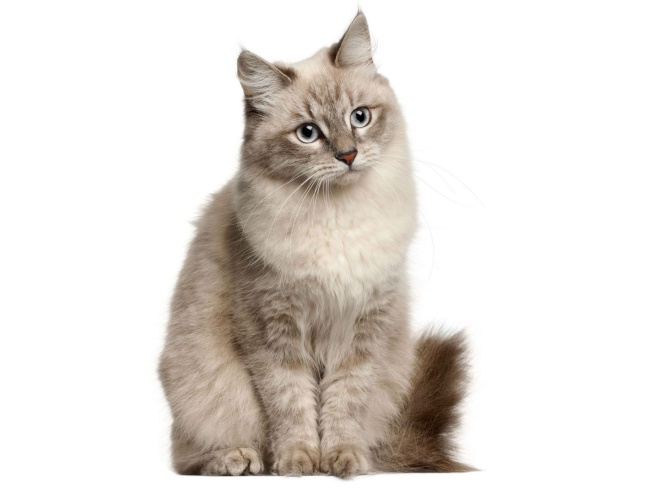
Siberian cats are independent, a bit rough, but affectionate and loyal to their owners. Their intelligence is legendary. This is one of the most intelligent and easily trainable breeds. They do not require constant attention, are calm, balanced and non-aggressive.
History of the breed
It is assumed that cats of this breed moved to Siberia together with settlers from Central Russia. There is also a hypothesis that these are assimilated Persian or Angora cats brought to Russia by Asians. Perhaps, Far Eastern wild forest cats also participated in the formation of the Siberian breed.
According to one of the versions, this breed got its name not because it comes from Siberia, but due to the large size (like Siberia itself) of its representatives and dense fur.
Care
The dense Siberian fur needs careful care. It is necessary to comb the coat daily, trim the claws once a week, monitor the diet and bathe the pet as necessary, especially during the shedding period.
These animals like natural food. The health of the Siberian cat is rich.
Breeding
All traditional colors are allowed, solid and with a pattern, with the exception of silver, chocolate, purple, as well as variants of cinnamon and fawn. The most popular is tabby, as it resembles the natural color of wild cats.
Defects of the breed are considered to be visible curvature of the tail, emaciation and soreness, as well as unbalanced, aggressive character.
White blue-eyed Siberians may inherit deafness.