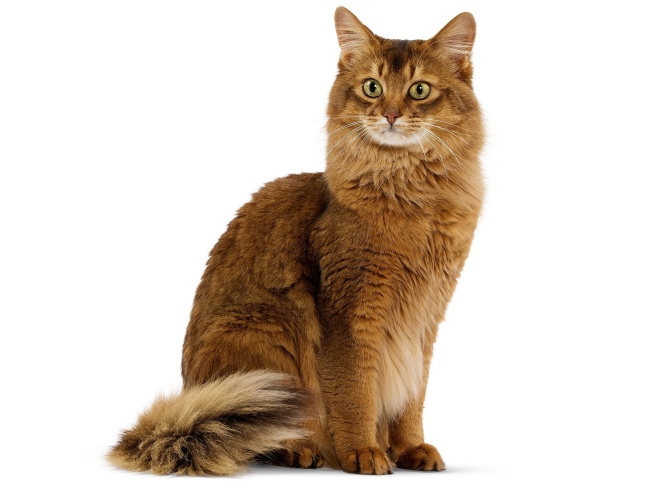
The Somali cat, or simply Somali, looks almost like the Abyssinian cat, but has a semi-long coat. Activity, tirelessness and grace - all this inherited Somali cats from the Abyssinian. Somalis are playful, obsessive, do not tolerate loneliness, closed doors and narrow rooms. However, compared to their closest relatives, they are "taciturn" and rarely give a voice.
History of the breed
When breeding short-haired Abyssinian cats, the kittens sometimes show the gene of long hair. For some time, such offspring were considered a marriage. However, things are changing. So, in 1963, the first long-haired representative appeared at a show in Canada. Fluffy Abyssinian cats fascinated everyone, and in 1965 a new breed was registered, which was called Somali.
Care
Somalis do not shed much, so bathing is almost unnecessary. It is necessary to trim the pet's claws regularly, provide a balanced diet and protect it from drafts. Semi-long hair Somali, strangely enough, does not need daily care. It is very dense and practically does not tangle, but once a week combing the pet will still have to be done.
Somalis get along well with small children. They do not release their claws during games and can long tolerate unconscious rudeness on their part. Also these cats get along well with other pets.
Breeding
Colors are allowed the same as those of Abyssinian cats. Defects of the breed are considered white spots all over the body, except for the "necklace", chin and nose, as well as any deformation of the tail. Extra or missing toes on the paws is also a reason for disqualification. The longhair gene is recessive. Accordingly, both parents must possess it to produce longhaired kittens.