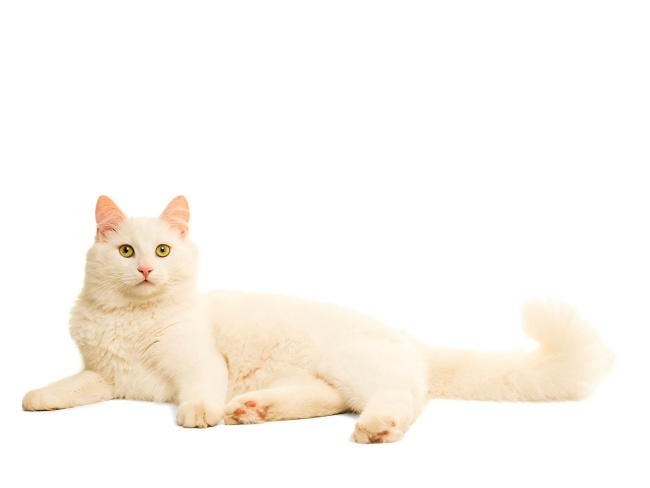
It is a neat, graceful cat with an aristocratic profile. The Turkish Angora loves to be the center of attention. It is intelligent, active, friendly but unobtrusive, and has a sense of dignity. It likes to communicate, but does not meow, but rather smokes.
The Turkish Angora with multicolored eyes is a national treasure of the country.
History of the breed
It is believed that Turkish cats - Angora, Van and Anatolian - are descendants of the most ancient cats, which were worshiped in Egypt. Turkish Angoras participated in the breeding of Persian cats. Since the XVII century, the Angoras have been recognized as an independent breed. In 1973 the breed was officially registered, but until 1978 only snow-white animals were considered Turkish Angoras. Later, new colors began to appear.
Turkish Angoras were imported to Europe in the XVI century as gifts. At that time these beauties were at the peak of popularity, as they were the only long-haired breed in the Old World.
Care
Angoras are unpretentious in food, they have excellent health, and no genetic diseases have been identified. However, congenital deafness is very common in cats with blue eyes. Wool needs daily care, which should become even more thorough during the shedding period. Angora cats do not like to bathe, so it is better to wash them with dry shampoo.
Breeding
Acceptable colors: white, black, red, cream, as well as all tabbies, smoky and bicolors. Breed defects: spots, wavy coat.