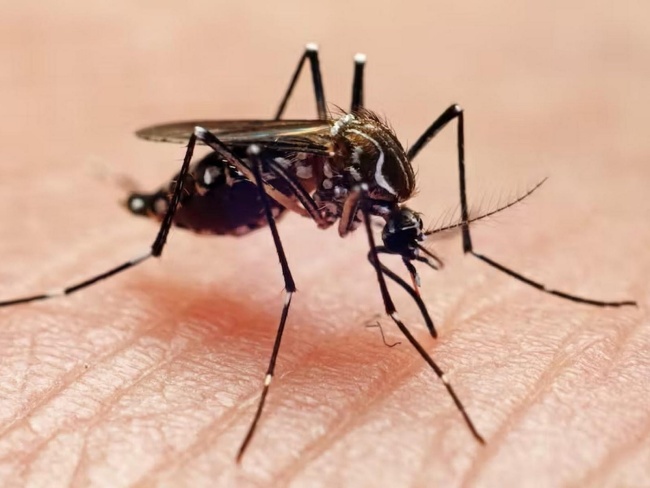
There is probably not a single person who has not suffered from a mosquito bite. And that's not all mosquitoes can do - they can kill millions of people!
Mosquito bite
The first sign of a mosquito attack is a characteristic thin squeak, which is usually made by an insect that is invisible in the dark. Hearing this sound, we involuntarily tense up - after all, no one wants to be bitten! But unpleasant sensations after the bite is still half the trouble. The bite itself can carry a terrible threat: mosquitoes carry a number of serious diseases, such as West Nile virus, yellow fever, filariasis (infecting the human body with tiny worms), dengue fever, encephalitis and, finally, malaria, which kills many people. It is no exaggeration to say that these "little flies" (this is the Spanish word mosquito, which is also used for mosquitoes in other languages) are the most dangerous animals on earth. Half of the world's population is at risk of contracting a serious disease from a mosquito bite.
Small flies
Mosquitoes need water to reproduce. The larvae of this insect lead an aquatic lifestyle. Mosquitoes feel best in places where there are reservoirs with standing water. Adults usually fly out of their hiding places at night. Barely born, young mosquitoes already know how to find food: their large eyes can see perfectly in the dark, and they can also find humans by smell. Mosquitoes can detect carbon dioxide at a distance of 20 meters. A little closer, they can smell a whole bunch of complex substances that make up human sweat. For mosquitoes, it's the most pleasant odor in the world.
Only females drink blood, and they inject an anticoagulant during the bite. Males feed on pollen and nectar. They find females by their characteristic squeak.
The term
An anticoagulant is a substance that prevents blood from clotting. Mosquitoes use anticoagulant to make blood easier to suck out.
Mosquito larvae
Mosquito larvae live in water. Usually, adult females will lower themselves over a body of water and submerge their abdomen in the water to lay eggs. Different species have their own preferences in choosing a "nursery" for offspring: some choose swamps, others - lakes, others - puddles. There are also completely unpretentious species.
Larvae hatch from eggs and feed on aquatic microorganisms. The larvae breathe air, so from time to time they rise to the surface to take a breath through a tube in the back of the body. After a few days, the larvae develop into pupae, which float to the surface and breathe through horn-like breathing tubes located on the head. Sensing danger, the pupae dive down. After a while, the top of the pupa bursts open and the adult mosquito emerges.
Disease vectors
There are 3,500 species of mosquitoes in the world, which form the family Culicidae (Mosquitoes). Fortunately for us, many of them prefer to feast on the blood of animals. However, there are hundreds of species that prefer human blood. Some of them are very dangerous. For example, Aedes mosquitoes carry dengue fever in Asia and yellow fever in South America and Africa. The genus Culex carries West Nile virus. Anopheles malaria mosquitoes in tropical regions transmit malaria. The search for an effective means of controlling this disease continues.
The most dangerous disease
Even by the most conservative estimates, every twenty or even ten years, malaria kills a number of people comparable to the population of Moscow. This disease infected more than 200 million people - all of them infected through the bite of a mosquito. Perhaps soon mankind will invent a vaccine against this disease, but for now the best way to protect yourself from malaria is to sleep under a mosquito net.
Interesting facts about mosquitoes
Blood is an important part of the diet of females. Without blood, they will not be able to lay eggs.
In addition to blood, pollen and nectar serve as food for mosquitoes - this is what males, who do not drink blood, feed on.
In just one second, mosquitoes make up to 600 wing flaps. That's where that characteristic thin squeak comes from!