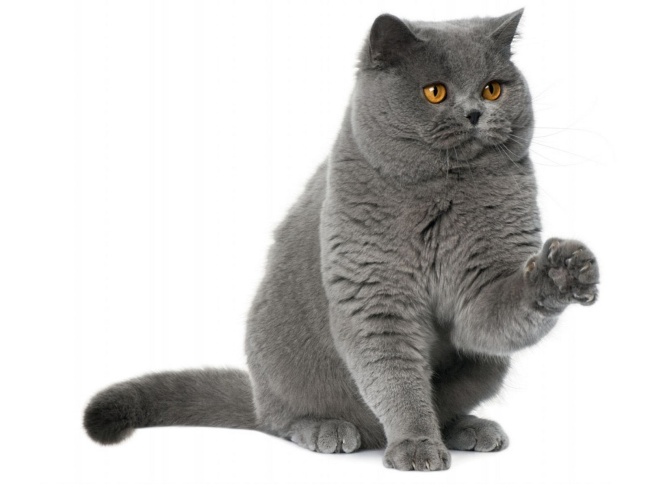
The British cat is a rather large cat recognisable by its characteristic oval face. They are true gentlemen: unruffled, calm, independent and absolutely not aggressive. They rarely beg for hands, are not too active and never require extra attention.
History of the breed
The British is an aboriginal breed formed as a result of spontaneous crosses of short-haired cats brought to England with semi-wild cats already living on the British Isles. The first British Shorthair was officially registered in 1889. As a result of crosses with fluffy individuals, the British Shorthairs began to have long-haired descendants, which were recognised as a separate breed in 2004.
Care
The British Shorthair is easy to care for. Its coat is very dense, does not tangle and does not require constant combing. Long-haired Brits are more difficult to care for - long hair should be brushed once or twice a week to avoid piling. Any food will do, but it is necessary to carefully monitor the diet of the pet, as Brits are prone to obesity. In general, the cats of this breed have a fairly good health.
A distinctive feature of both short-haired and long-haired Brits is a very dense and thick undercoat. In short-haired representatives of the breed, the scalp and undercoat are almost the same length, so their fur resembles plush.
Breeding
Different colours of the British are allowed - solid, tabby, tortie, smoky (with lighter undercoat and the main part of the coat and darker ends), bicolours and point. Defects of the breed are tail fractures, skeletal deformities (including the jaw), eye colour that does not meet the standard, and white spots on solid colours.