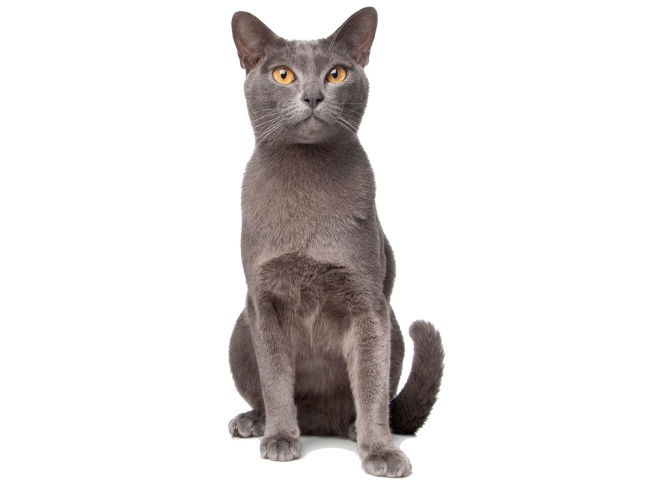
There are European and American types of Burmese cat. Representatives of this breed are very mobile, bouncy, playful and affectionate. They are always in search of adventure, so they require constant control from the owner.
History of the breed
In 1930, Dr Joseph Thompson brought a small brown Wong Mau kitten to San Francisco from the west coast of Burma. Together with scientists at the University of California, an elaborate cross-breeding programme was developed. In 1934 Thompson approached the United States Cat Fanciers Association with a proposal to officially register the Burmese breed, and this was done in 1936.
Care
Burmese cats do not require specific grooming. Their short coat only needs to be brushed once every few weeks. During the shedding period, it is recommended to do it more often. The Burma is a healthy and hardy breed, not prone to certain diseases. However, newborn kittens may have skull deformities, lacrimation and breathing problems due to the short nose shape.
Burmese are born acrobats, their amazing jumps and somersaults are the envy of even circus actors. They love the attention of people and do not like to be alone. Burmese will easily make friends with children, take part in their games and at the same time have time to draw the attention of other members of the family.
Breeding
The main inconsistencies with the standard are: too narrow muzzle, sunken cheeks, white spots in the colour, green eyes, stripes on the limbs. Difficulties in breeding Burmese cats may arise due to their small number in Russia, because of which inbreeding is possible.
Today the following colours of Burmese cat correspond to the European standard: sable, blue, chocolate, red, purple, point.