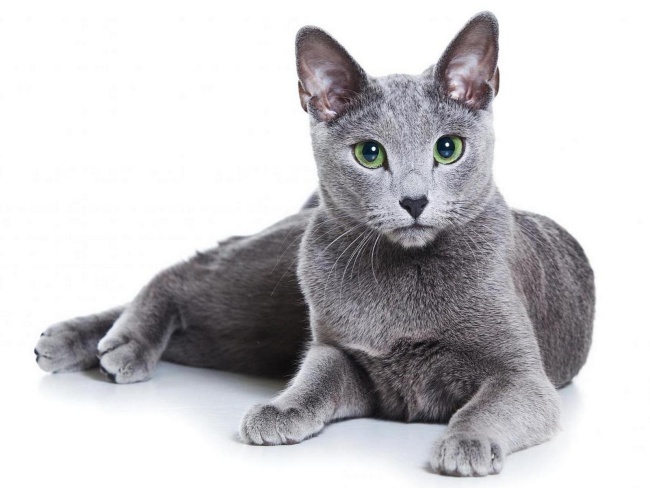
Russian Blue cats are noble, loyal, calm, not too trusting of strangers, but friendly and affectionate with their owners. They are unobtrusive, do not demand attention, but are very gentle if they want to communicate.
History of the breed
In 1893, a pair of Russian blue kittens was taken from Arkhangelsk to England, and it is believed that it was with them that the planned breeding began. At first the cats were called Arkhangelsk cats, then they changed many names before they were registered as Russian Blue. After World War II, this breed, like many others, was on the verge of destruction and was restored thanks to the enthusiasm of breeders.
According to legend, Russian blue cats appeared in Russia a long time ago, perhaps even before the beginning of Kievan Rus. There is evidence that Catherine II gave them to foreign ambassadors.
Care
Care for cats of this breed is not difficult. The pet is enough to comb out once a week, so that the plush wool was beautiful and shiny. Bathing the animal is worth only during molting. Russian blue cats have no tendency to genetic diseases. They are characterized by good health and with good care live long enough.
Breeding
Defects of the breed are considered to be creases in the tail, spinal deformities, curvature of the jaw, strabismus, polydactyly or, on the contrary, an insufficient number of toes on the paws, spots on the coat. Crossbreeding with other breeds is currently prohibited by the standard.