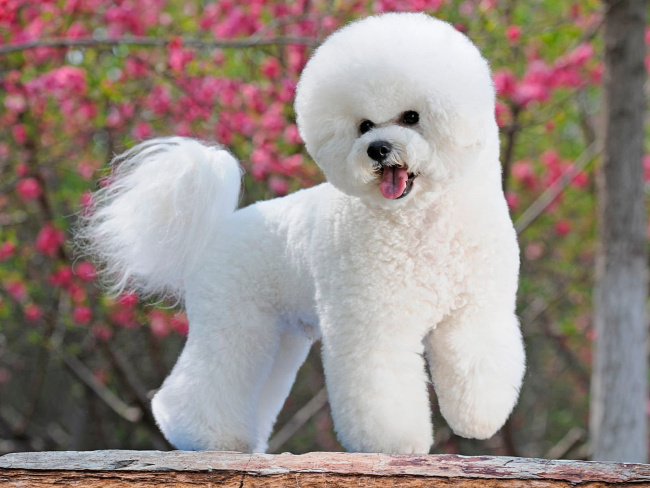
The Bichon Frise is an intelligent, loyal and affectionate dog.
The first known mention of small dogs of white color with long curly hair living on the Mediterranean coast dates back to the XIII XIV centuries.
It is believed that the heyday of popularity of bichons came to the Renaissance.
At the beginning of the XVI century, during the reign of Francis I, Spanish sailors brought dogs of this breed to France. However, they became a real favorite of the court nobility during the reign of Henry III. The king never parted with his pets for a minute: a special basket with a bichon in it was worn around his neck on a long ribbon.
Temperament and Character
Cheerful, playful, obedient and cheerful little dog with a cheerful and courageous character. Quick to adapt to any environment and easy to train. The breed is ideal for people who have no experience in keeping dogs. Bichons are intelligent, loyal and affectionate. They are very distrustful of strangers, so they will be good watchdogs. Always in a good mood, this cheerful dog will make a great companion.
Ideal companion
Cheerful, mischievous and fun-loving, Bichons are never irritated by trifles and are much calmer than other varieties of bichons. The Bichons' wonderful character, intelligence and friendliness, low maintenance and independence make them ideal companions for the elderly.
Care and Housing
Bichon Frise are ideal for keeping in an urban apartment, but need regular walks and do not like to stay home alone. If you don't want your dog to have a show career, then grooming is easy even for a novice owner. The wool of the Bolonok is long, soft, silky, strongly wavy or curly, with a thick undercoat, it does not require daily combing. A bichon should be washed as it gets dirty, usually once every 7-10 days. There are age periods when a bichon develops hairballs: the puppy's coat change (around 7-9 months) and the maturation period (1.5 to 2 years). During this time, the dog needs to be groomed more thoroughly and frequently. Failure to do so will cause the coat to pile up, giving the dog an unkempt appearance.
After washing, the dog should be dried with a hair dryer, while combing the hair with a special brush.
The diet of a bichon should be very varied, but when preparing the menu should, first of all, proceed from the lifestyle of the dog. Active pets use more energy, so they need to eat more.
Despite their relatively good health, Bichons are prone to eye diseases (cataracts, retinal atrophy), dermatitis and allergies.
Friendly Braves
Unlike some other miniature dogs, the Bichon gets along well with children of all ages and other pets. It should be noted that Bichons serve a function beyond just being ornamental dogs: they are also brave and quite resilient.
A painter's favorite
In the 16th century, French bolognese were very popular. The snow-white little dogs were affectionately called “little princes”. Titian and Joshua Reynolds, Goya and Renoir depicted celebrities in the company of bichons on their canvases. Unfortunately, by the beginning of the XIX century interest to this breed was completely lost and bichons turned into ordinary street dogs. It was only in 1933 that the breed was officially registered, returning to its former noble status.